Assignment overview
From script to sequence
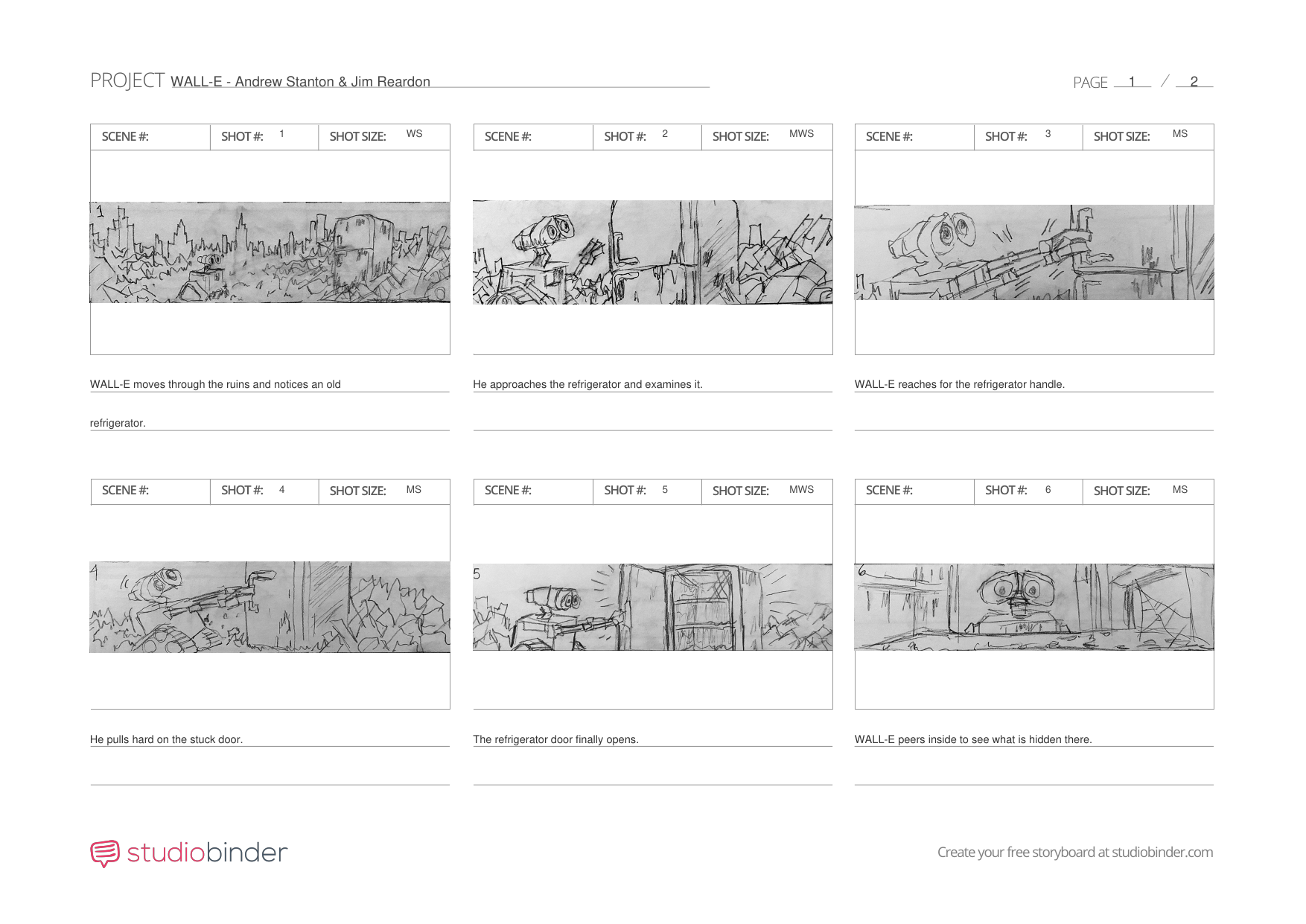
I selected a short sequence from WALL-E in which WALL-E discovers a plant hidden inside an old refrigerator. The sequence has a simple beginning, middle, and end that works well for visual storytelling.
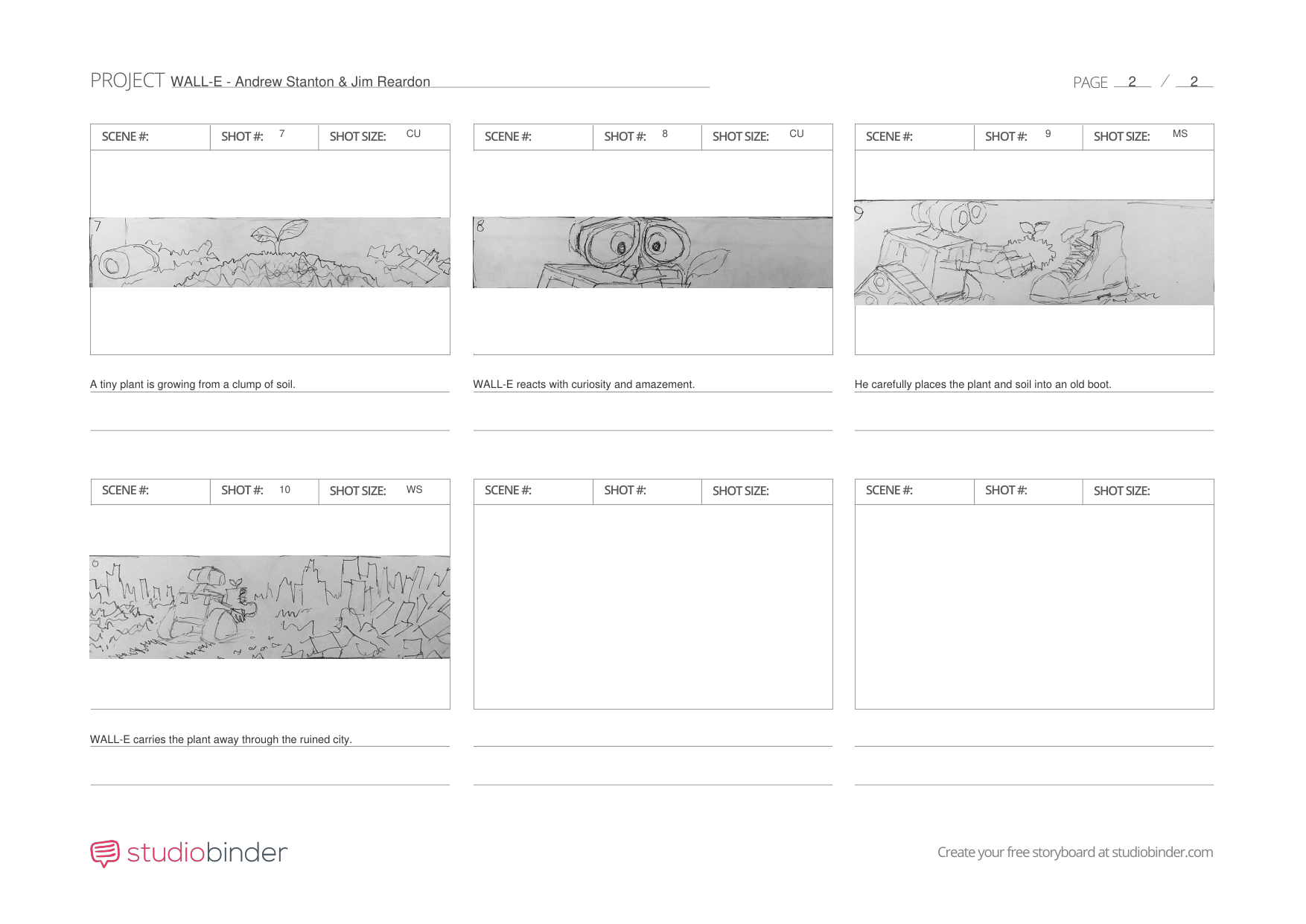
I used ten storyboard panels and varied the shot sizes to establish the environment, show WALL-E's actions, and emphasize the moment he discovers something alive.
Beginning
The approach
WALL-E moves through the ruins, notices the refrigerator, and works to open it.
Middle
The discovery
The door opens to reveal a tiny plant. Close-ups focus attention on the plant and WALL-E's reaction.
End
The departure
WALL-E carefully places the plant in an old boot and carries it away through the ruined city.
Final storyboard
Two sheets · Ten shots
Reflection
Planning the story visually
This assignment helped me think about how shot size and sequencing communicate a story before anything is filmed. Wider shots establish WALL-E within the ruined environment, medium shots make his actions easy to follow, and close-ups emphasize the plant and his reaction to it. Planning the sequence as individual frames also made me more aware of continuity and how one image needs to lead naturally into the next.
View the assignment requirements
Choose one to three pages from a script and create a six- to twelve-panel storyboard with a clear beginning, middle, and end. Include a summary beneath each panel, identify the script title and author, and post the completed storyboard to the blog.